
The Wheel Turned
In the municipal records of Partanna, I found the abandoned child who would become my great-great-grandfather.

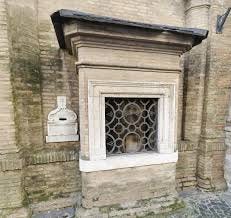
I’m back in the Adirondacks, enlarging blurred municipal pages from Partanna on my laptop. At first, the nineteenth-century handwriting seems impossible. Then suddenly the words emerge: nella casa ove è affissa la ruota—the house where the wheel is installed.
Not legend.
Not literary metaphor.
A physical wheel attached to a building in western Sicily in 1855.
Then: Si è rinvenuto nella ruota… There was found in the wheel.
And I feel, deep inside, the reality of these lives: women forced to abandon their babies to the wheel; babies lost to the anonymity and dangers of abandonment.
The records reduce abandonment to procedure: the child deposited anonymously, the officials retrieving the infant, the inspection for “visible marks on the body,” the naming, and the transfer to a wet nurse. The actual names differed from place to place, though in Partanna, babies were left in Camastra—perhaps the name of a street or foundling institution—and the children were given the name Camastrino, which marked them as illegitimate throughout their lives. Once the child was named, the baby was sent a nutrizione—out to a wet nurse.
In entry after entry—and there are a significant number of abandoned babies in 1855 Partanna—the children are listed as having no known mother or father and no visible marks on the body. They enter the system anonymously and remain that way unless someone steps forward to claim them.
This is unusual enough that when I first encountered the record of my great-great-grandfather in Partanna, the Town Clerk was visibly surprised.
“See?” he said, pointing to the record. “The baby was reclaimed many years later and given the name Inglese.”
My family name.
That baby was my great-great-grandfather, Antonino Inglese, who came to the United States in 1906 with my sixteen-year-old great-grandmother and my twenty-one-year-old great-grandaunt, Mimi.
What strikes me when I look at these records now—on my laptop screen rather than in person at the Town Hall—is how emotionally flat they are. Baby after baby, placed in the wheel. Entries in a dusty register. Cogs in the great bureaucracy. Before the child is laid in a cradle, they receive a file.
They were named by institutions—convents or municipal offices. And in between their records and their surnames, this sense of abandonment hardens. I suspect that’s what happened to Antonino. Born to a noblewoman but with no father to claim him, he was vulnerable throughout his life. Not fully accepted by the nobility, even after his seventy-year-old mother reclaimed him, nor fully embraced by the mafia don who later brought him into his fold, this sense of rootlessness would follow him to the streets of East Harlem and the prison in Atlanta.
He was Camastrino for a long time. Even after he was reclaimed and given the name Inglese, the mark of abandonment remained embedded in him. Bureaucracies create identities that can outlive the records themselves.
In a few weeks, I’ll return to Sicily to continue researching The Orphans’ Wheel. More than anything, I want to stand in the place where that wheel once turned and understand what it was like for Antonino’s mother to approach that terrible device and leave her child there.
Some have advised that it may be difficult to find someone who’ll speak openly of the wheel. The wheels were boarded up and abandoned more than a hundred years ago—symbols of shame, not just for the mothers who left their babies there, but for the government that gave them no other solution.
Still, I see them there: a young Rosina clutching her newborn, trying to resign herself to this terrible decision. Maybe it took her a long time to slide the tray out and lay her child inside. Or maybe she did it quickly.
The archives do not say.
But they do show what happened next, over and over again.
The wheel turned.
She rang the bell.
And another child entered the record.
Your writing moves me, again and again. <3
Wow! How fascinating. And very thought-provoking when juxtaposed with our current child welfare system. Good luck in your research!